Tips to Avoid Overediting
It all comes down to readability and ensuring the author’s message is being told in the best possible way for the readers while remaining true to the author’s voice.

It all comes down to readability and ensuring the author’s message is being told in the best possible way for the readers while remaining true to the author’s voice.

It’s easy to get swept up in the stories we experience via ebooks and audiobooks, but it adds another layer of appreciation when we can better understand how they make it into our digital libraries.
SEO Description:. A look into audiobook productions and the reasoning behind limited ebook rentals.

At Ooligan Press, we use KDP to upload our upcoming titles and our ebooks. It is a fast and easy way to publish a title that seemingly doesn’t have much screening process. After creating a couple of KDP pages for our upcoming titles, I thought to myself, “That’s it? I just have to click a box that says ‘this was not written by a computer’ and I’ll be able to sell it?”
The ampersand (&) is sometimes used in place of the word and in informal writing, like in lists and brand or company names (Johnson & Johnson, AT&T, Barnes & Noble, etc.). Where you don’t generally see ampersands in the place of the word and is in formal writing, like books. So when is it appropriate to use an ampersand, and when should you spell out and?

When you’re editing a manuscript, there are an abundance of reasons why you might want to pose a query. For example, if you’re copyediting, you may want to point out a spelling you’ve found that’s inconsistent, ask for clarification about ambiguous wording, or find out more about an author’s intended meaning, just to name a few. Although the best method of query writing may vary by author based on what they respond well to, there are a few best practices when it comes to writing effective author queries.
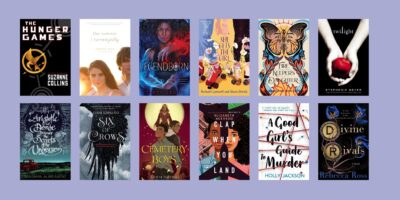
Young adult (YA) fiction captivates readers with its relatable themes of first love, heartbreak, and self-discovery, all while addressing pressing social issues like mental health and discrimination. Through its unique narrative style and diverse genres, YA fiction offers a transformative reading experience.
A well-crafted sales video doesn’t just tell potential readers what the story is about, it makes them feel the story before they’ve even turned the first page and helps them get established with the author on a personal level. This is a step-by-step guide on how to create a compelling video to capture readers early on.
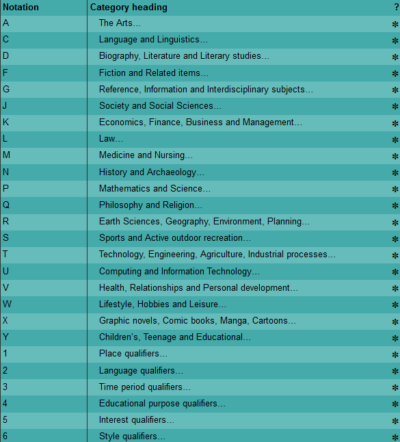
THEMA is a system used for categorizing books by their subject matter. Like Book Industry Standards and Communications (BISAC) or Book Industry Communication (BIC), THEMA codes classify book subjects, making the process of classifying titles simpler. Unlike BISAC or BIC, these codes are not solely used in a specific region like Europe or North America. Due to THEMA being a multilingual system, it can be utilized on an international level.
Ooligan strives to handle every manuscript with care and to take into account every aspect, and angle, of the potential of each one that comes our way. It is an anxious time waiting for a publisher to get back to you about your story that has been worked on for years. That is not something that we take lightly.