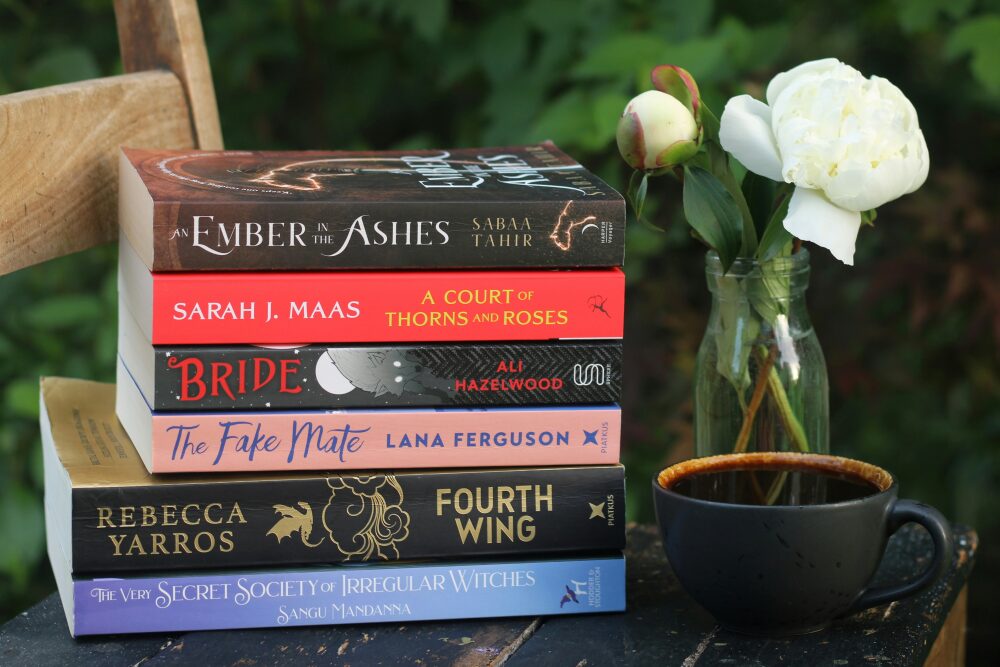
What defines a story as “young adult”: the protagonist’s age, the reading level, the story’s contents, the specific themes, or the intended audience? More concerning, how might the presence of a marginalized identity (e.g., BIPOC, feminine, LGBTQ+, disabled) color one’s perception of what is considered—and acceptable—“YA” fiction?
As part of a fiction writing seminar in undergrad, I wrote a linked collection of short stories that centered queer characters of color. This was momentous for my personal writing journey and identity formation as a queer POC; up until then, I wrote cis heteronormative, racially ambiguous main characters for most, if not all, of my then-twenty years of life. I was excited, but my (predominantly white, male) classmates pigeonholed my work as “young adult fiction”—despite all the main characters being in their twenties.
And my experience was not an isolated incident. Author Xiran Jay Zhao shared why they have issues with the definition of and criticisms toward YA fiction. “[T]here are many complex industry reasons why . . . many femme-presenting, queer, or POC authors end up in YA, even though the content of their books are not necessarily ‘suited for children.’”
It’s no secret there is still systemic discrimination in the publishing industry. Femme-presenting authors or characters were historically treated as unfitting for “adult” genres/audiences, thus titles with these features were often marketed toward younger audiences. Those adult genre spaces were also “hostile” toward femme-presenting, BIPOC, and LGBTQ+ authors. As Zhao says, “YA was seen as . . . a refuge for POC and queer authors.”
Yet BIPOC- and LGBTQ+-centered or authored works, regardless of there being YA-aged protagonists, were often correlated with the “coming of age” novel, or the bildungsroman—which itself has a controversial significance in the US. For many authors of marginalized identities, the bildungsroman is negatively associated with cultural assimilation and indoctrination, and this association continues to be weaponized even in contemporary discourse.
Just look at US book ban trends: As of this writing, HR 7661, “a bill that would prohibit federal education funds from being used in public school classrooms and school libraries alleged to have ‘sexually oriented materials’ in their collections,” has moved on to the floor vote in the House of Representatives.
One of the criticisms Zhao receives as a YA author involves “mature content.” “Not all YA is supposed to be suitable for twelve-year-olds. The genre has evolved greatly over the past few years . . . There is a gigantic difference between Lower YA and Upper YA.” Though obvious, it should be noted that while YA fiction as a market category targets readers aged twelve through eighteen, YA fiction authors and a major segment (over 51 percent!) of YA fiction readers are adults. This demographic has affected the kind of content found in YA fiction, from “aging up” trends to more “mature” subject matter in YA. And despite “YA” referring to, well, young “adults,” there are even those within the industry who judge adult YA readers, calling them “guests” of the category.
There was even a small “new adult” movement, featuring characters aged eighteen through twenty-four, that aimed to blend the accessibility of YA with the mature themes and content of adult literature. But, according to Zhao, booksellers “shoved all of the [NA] books into YA.” (New adult does not exist as a BISAC code, but “young adult” and “juvenile” do.) Even now, there are titles with college-aged protagonists (eighteen through twenty-two) being categorized as YA. But with the Big Five founding imprints specifically for new adult titles, this may change over time.
YA literature can be and is a source of empowerment—for readers and authors. Policing, even censoring, what is “acceptable” or “normal” for certain audiences to read based on arbitrary age (and other) categories and “proprietary” content is, ultimately, reductive and harms not only consumers and authors but also the industry and culture at large. As others have argued, teenagers are not exempt from “mature” experiences, so their literature shouldn’t be either.
Maybe the next time you see a title “wrongly” shelved in the YA section, instead of pearl-clutching, see if it’s by a femme-presenting, BIPOC, and/or LGBTQ+ author. Consider the complex industry dynamics and sociopolitical systems at play. Actively suggest ways the industry (including booksellers and librarians) can keep adapting to suit consumer needs.
And call your local representatives to stop book banning.
Sources
https://www.youtube.com/shorts/tcTWzDJT6pI
https://lareviewofbooks.org/article/comping-white/
https://journals.sagepub.com/doi/full/10.1177/14614448221090195
https://ebookcentral.proquest.com/lib/psu/detail.action?docID=3008271.
https://pen.org/report/the-normalization-of-book-banning/
https://selfpublishing.com/young-adult-fiction/
https://studyfinds.com/teen-books-young-adult-novels-mature-age/
https://www.bisg.org/complete-bisac-subject-headings-list
https://www.writersdigest.com/the-enduring-power-of-ya-literature
https://www.ooliganpress.com/maturity-for-the-ages-why-ya-literature-needs-more-mature-themes/