I am in a program where the classroom is an example of a trade press, and I assist in the book publishing process. Yet, when I get home, I can’t read the printed books. This is the reality of being visually impaired at Ooligan Press. From acquisitions to launch, it is an entirely digital journey; that’s where I come in, powered by my laptop accessibilities—which are not just accommodations but a necessity.
Ooligan Press strives for inclusion and equity, whether in literature or the people within it. I want to be the voice I didn’t have when I was looking into publishing programs and career options. I want to help other people who are like me understand that there is a place in publishing for them.
Growing up, I used to hate books. As a visually impaired person, it is difficult for me to read print. The only way I could read a book was if it was large print or I used an assisted device to enlarge the text. Large-print books were hard to come by often; I spent multiple Saturdays at the library scouring the shelves to find just one large-print book that was geared towards children. More often than not, I would come up empty-handed alongside my siblings who had found mountains of regular-print books.
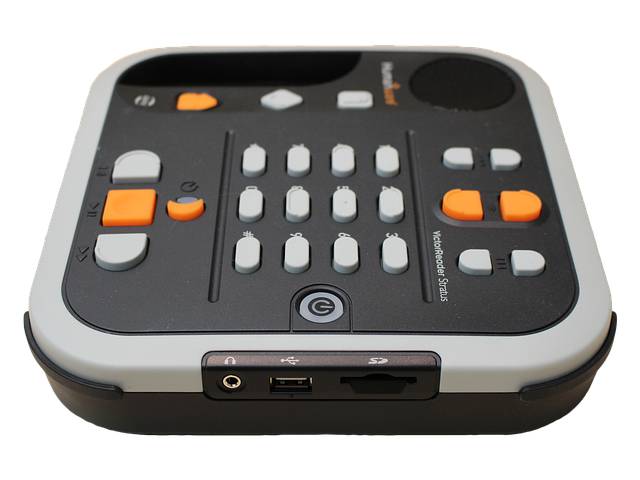
This meant I had to rely on the assisted device. It took up an entire desk and would magnify a few letters at a time. You can imagine how long it would take to simply read a page of a book. Aside from how time-consuming the device was, I loathed the fact that I had to use it at all. Needing to use a video magnifier to read would have stamped a scarlet D on my chest. D for different. D for disabled. It came to the point where I’d even resorted to holding a book in my hands and pretending to read like everyone else during third-grade reading hour. At that moment, I decided that I was never going to read a book.
With ten-year-old Hiba’s reasoning, it seemed more rational to never show the rest of the world that I wasn’t the same as them than it was to ever pick up a book. I was determined to live my life without reading a single book. It had stayed that way for almost a decade.
I’m not quite sure what changed. Maybe it was the evolution of assistive technology, but in my junior year, I downloaded a book that was required reading for my English class onto my Kindle. In that moment, I immediately knew the power books could hold and the worlds I’d missed out on. With the rise of ebooks, I was finally able to access books easier, and I seized the opportunity. It wasn’t until my first English literature class, where I discovered what became my favorite epic—Faerie Queene by Edmund Spenser—that I saw that literature was not just words on a page. Literature involves syntax, language, and other poetics that are combined.
Being a part of Ooligan Press made me see that my fears before starting this program were unnecessary. Although I wanted to work in publishing, I was nervous that my visual impairment would hold me back.
The press has shown me that my visual impairment isn’t a burden but an addition. This program and everyone working in it puts emphasis into making pictures accessible to those who can’t see them by including alt-text. As of right now, I have not run into any issues, especially when everything involved in the act of publishing a book is digital. I am able to use my computer with my accessibility features when doing tasks like designing book covers, creating social media posts, and crafting book launch flyers.
If I can find my way, so can you!