
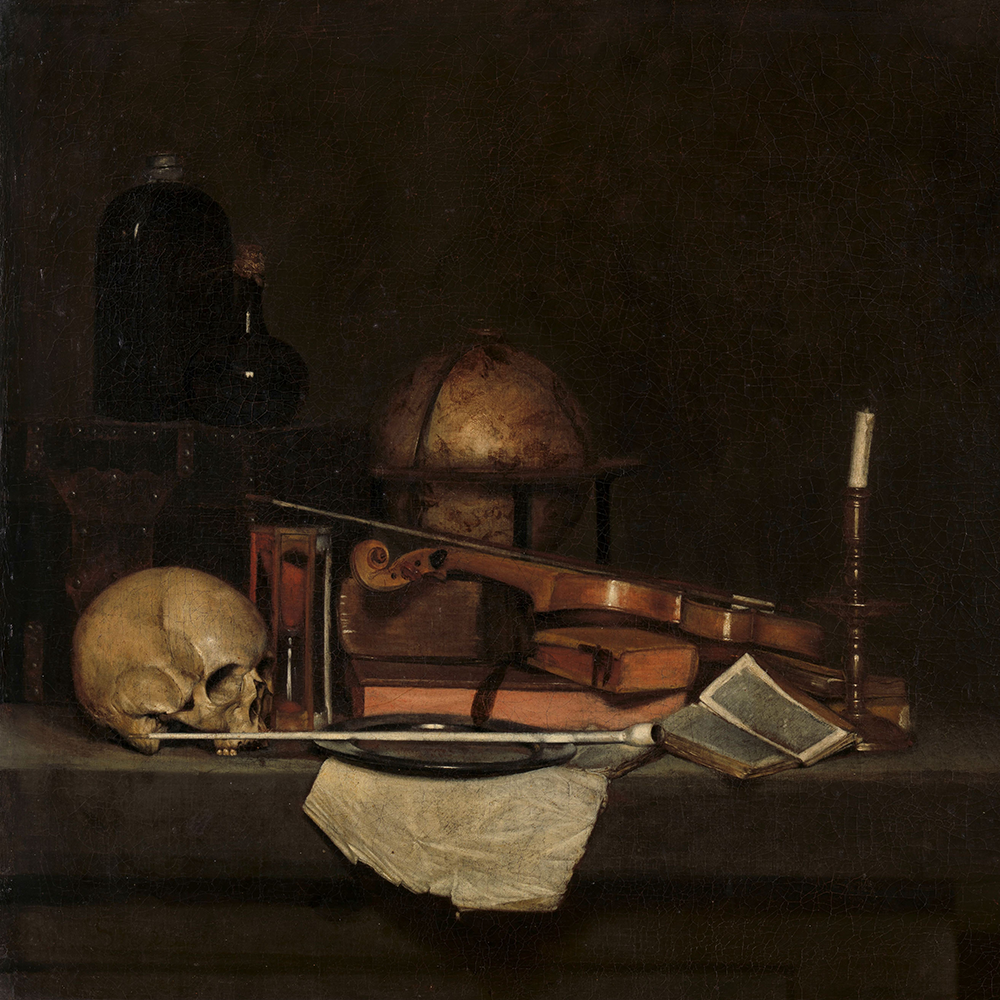
Dark academia isn’t that new, but it might feel like it is, having reached popularity in 2021 due to an increased visibility on TikTok. It’s a genre that’s both expansive and clearly defined and both simple yet interesting to explore further. So how did this genre appear on your For You page out of thin air?
Dark academia began as an online phenomenon on social media microblogging platform Tumblr in the mid-2010s. Defined by its dedication to aesthetics, dark academia was defined by moodboards, book and film recommendations, and tips to integrate the style in your daily life. The aesthetic was not solely defined by fashion and locations, but by the types of books to read to appear the most “dark academic”—namely dark and gothic-leaning classics such as The Picture of Dorian Grey or Frankenstein—and topics like Classics, literature, history, and Latin to study.
This elite university and prep school vibe drew most of its inspiration from two urtexts: Dead Poets Society (1989, dir. Peter Weir) and The Secret History by Donna Tartt (published in 1992). Tartt’s novel was a literary satire of wealthy, elite Classics students at the fictional Hampden College in Vermont, inspired by the real life Bennington College that Tartt herself attended. The plot especially hinges on the exclusive group murdering one of their own, which becomes a common theme of the genre as it develops.
Dark academia enters into more of the public light, and therefore becomes a legitimate literary genre, in about 2021, following its increased popularity on video-based social media TikTok and, in particular, its famous BookTok community. Other books published prior to this popularity boost help shape the definitions of the genre. Using The Secret History as a guide, dark academia can be considered to have the following main factors: academic aesthetics, dark or gothic themes, and critique of academia—though the actual overarching or main genre can vary. Popular dark academia works range from literary and contemporary fiction to thriller, horror, and even fantasy.
As dark academia has grown, the young people so integral to its initial development on Tumblr find themselves in the very institutions they’ve been romanticizing for years. It is because of this romanticism that the dark academia “community” appears to be grossly lacking in self-awareness and an object of much criticism and debate. The Secret History is so commonly misinterpreted that even in my research I found critiques of the classism, exclusivity, and debauchery of the characters which seem to miss the point almost entirely. There is a subtlety to Tartt’s satire that goes over heads and leads to this idealized version of academia being the representation of the values of the genre, despite the urtext deliberately commenting on it.
M.L. Rio, author of If We Were Villains, and Leigh Bardugo (Ninth House) clearly recognize the necessity of this critique in their dark academia works, interacting with the pressures and injustices of academia in the plots of their novels. In an article for The Bookseller, Rio writes:
Higher education—especially in the US and especially in the humanities—has been in a protracted state of crisis for the better part of 30 years . . . Many graduate only to find themselves in a job market oversaturated with college grads and septuagenarians who refuse to retire. There is no room for them. There is no upward mobility. For many, there is only debt and disenchantment, and for some, the failure to live up to their enormous potential is so shameful they have faked their own deaths or taken their lives. This is the dirty secret of the “DA” boom: all academia is dark academia.
The genre is both reality and romance, gothic and cozy, “at once wish fulfillment and cautionary tale,” says Rio. Maybe, too, it’s easier to project these concerns of an appealing but dangerous dark undercurrent onto something so inaccessible and elite anyway, rather than face it in our own lives and fields.
Dark academia, though critical in nature, is not free from criticism itself. While LGBT representation and themes of homoeroticism are often present, “much of the aesthetic still relies on conservative standards of heteronormative desire,” writes Adrienne Raphel for Literary Hub. DA is and has always been overwhelmingly white and Euro-centric, which is clearly seen in the content of aesthetic and literary materials found in dark academia. Even today on TikTok, “when [a] video is made by a person of colour (at most 20% of sampled videos) the still images nevertheless typically display white models. Self-conscious appropriation of DA norms for the purposes of explicit subversion or racial critique was absent,” notes Simone Murray. In books released since 2020, we can see this lack of representation being challenged—Babel has a Chinese main character and interrogates imperialism and academia’s role in perpetuating it at an alternate history Oxford University. Legendborn is a young adult fantasy about the only black girl who gets involved with a secret society at the University of North Carolina Chapel Hill based on Arthurian myths and how her own family history and America’s history of racism ties it all together. I don’t list these examples to excuse the issues present in the genre, or to hand wave them away and say those criticisms don’t matter. They do. But I think it’s also important to recognize the work being done in literature since dark academia’s meteoric rise to popularity amidst the COVID-19 pandemic. Adding diversity to publishing and people’s reading habits is something that TikTok has managed to do especially well, even in a genre like dark academia, which so inherently hinges on elitism and exclusivity in its theming.
There are issues to address in dark academia—its history and its perception—but to me these things represent even more reasons as to why it’s such an interesting new genre. While it can appear very elitist and exclusive, dark academia is prime for diversity and new perspectives that are important to explore.
Sources:
Murray, Simone. “Dark Academia: Bookishness, Readerly Self-Fashioning and the Digital Afterlife of Donna Tartt’s The Secret History.” English Studies, vol. 104, no. 2, 2023, pp. 347–364. Taylor & Francis Online, https://doi.org/10.1080/0013838X.2023.2170596.
Raphel, Adrienne. “A Brief History of (My) Dark Academia.” Literary Hub, 28 September 2022, https://lithub.com/a-brief-history-of-my-dark-academia/.
Rio, M.L. “The enduring appeal of dark academia.” The Bookseller, 4 October 2023, https://www.thebookseller.com/comment/the-enduring-appeal-of-dark-academia.